"Fine" is a default, not a verdict
One-word answers are a setting. Between 8 and 12, that setting can change.

Get past "fine" in 14 days: a simple daily plan for parents of 8–12-year-olds.
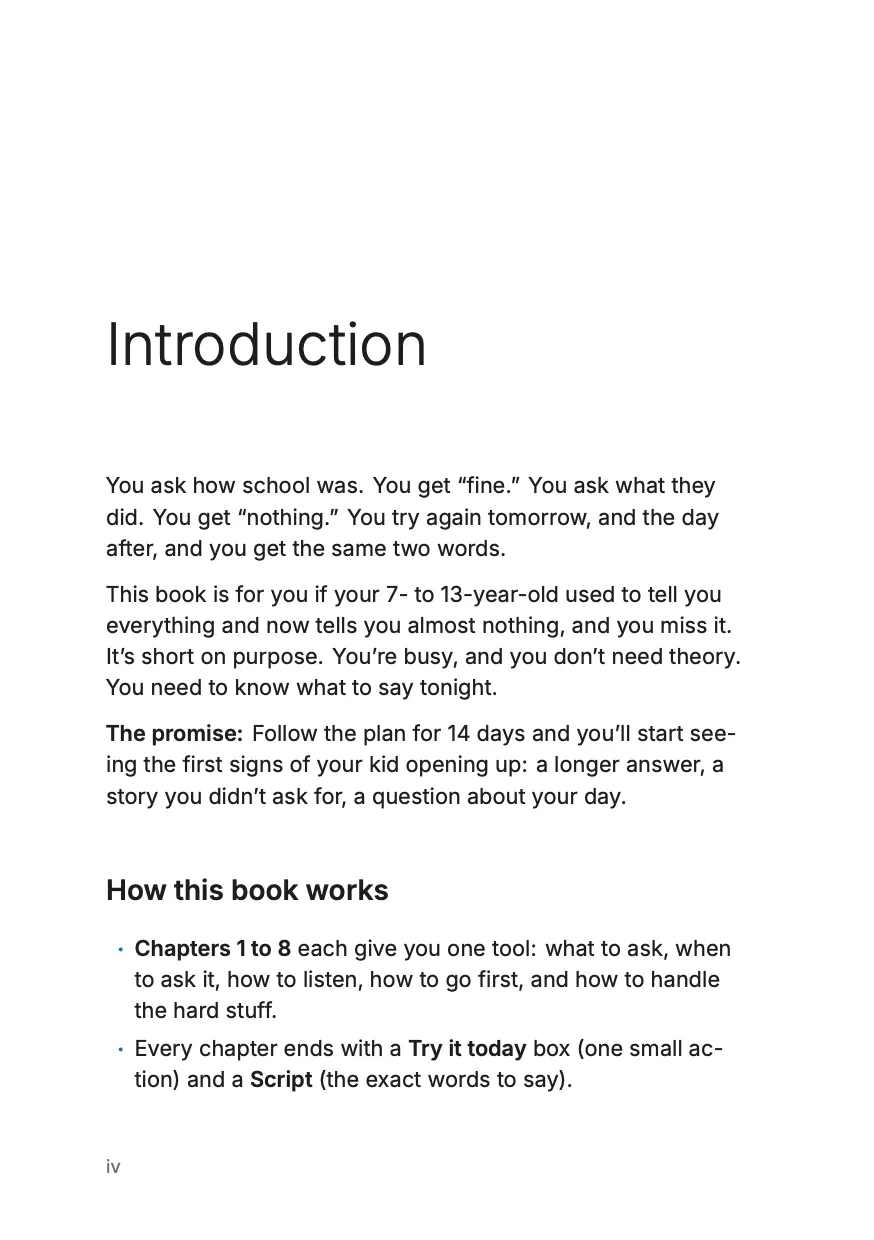
Follow the plan for 14 days and you'll start seeing the first signs of your kid opening up: a longer answer, a story you didn't ask for, a question about your day.
One-time payment · Instant PDF download

One-word answers feel like a wall. Often it's tiredness, bad timing, a question that's too big, or worry about how you'll react.
A big, general question is easy to shut down. A smaller, specific one is easier to answer.
The moment you want the story is often the moment they're least ready to tell it.
Fixing, lecturing, or overreacting to the small stuff teaches them to keep the rest to themselves.
If you never go first, they have no picture of what sharing a day looks like.
A single good conversation doesn't turn into a habit on its own.
A short daily plan for the years when answers shrink to one word.
One-word answers are a setting. Between 8 and 12, that setting can change.
Swap the big question for one specific one, or a statement that leaves room for a story.
Car rides, bedtime, snacks, walks. Map the two or three windows your kid actually uses.
How you handle the small stuff decides whether they bring you the big stuff.
A small, honest story from your day, including a small miss, gives them permission to tell theirs.
Fourteen steps, each with the words to say. Consistency beats a big talk.
Start
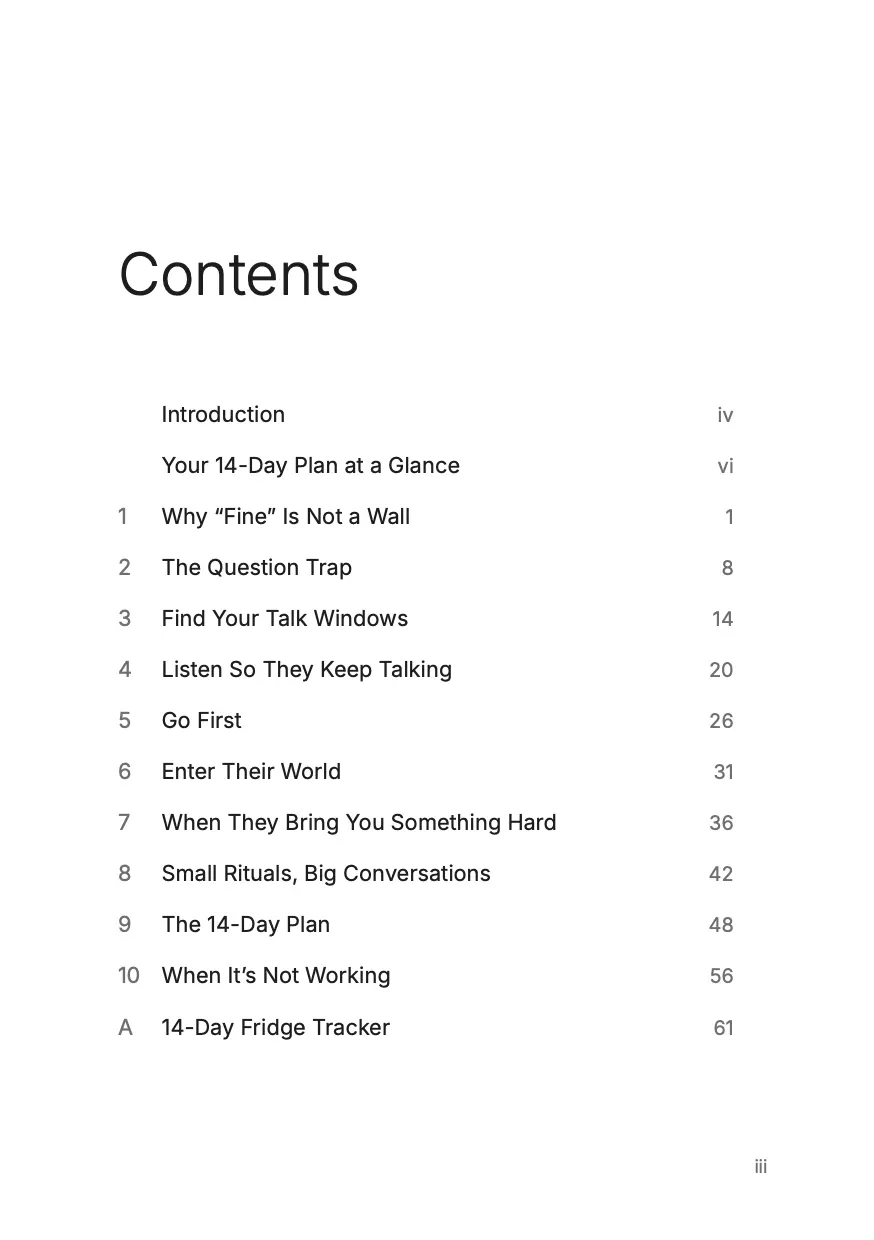
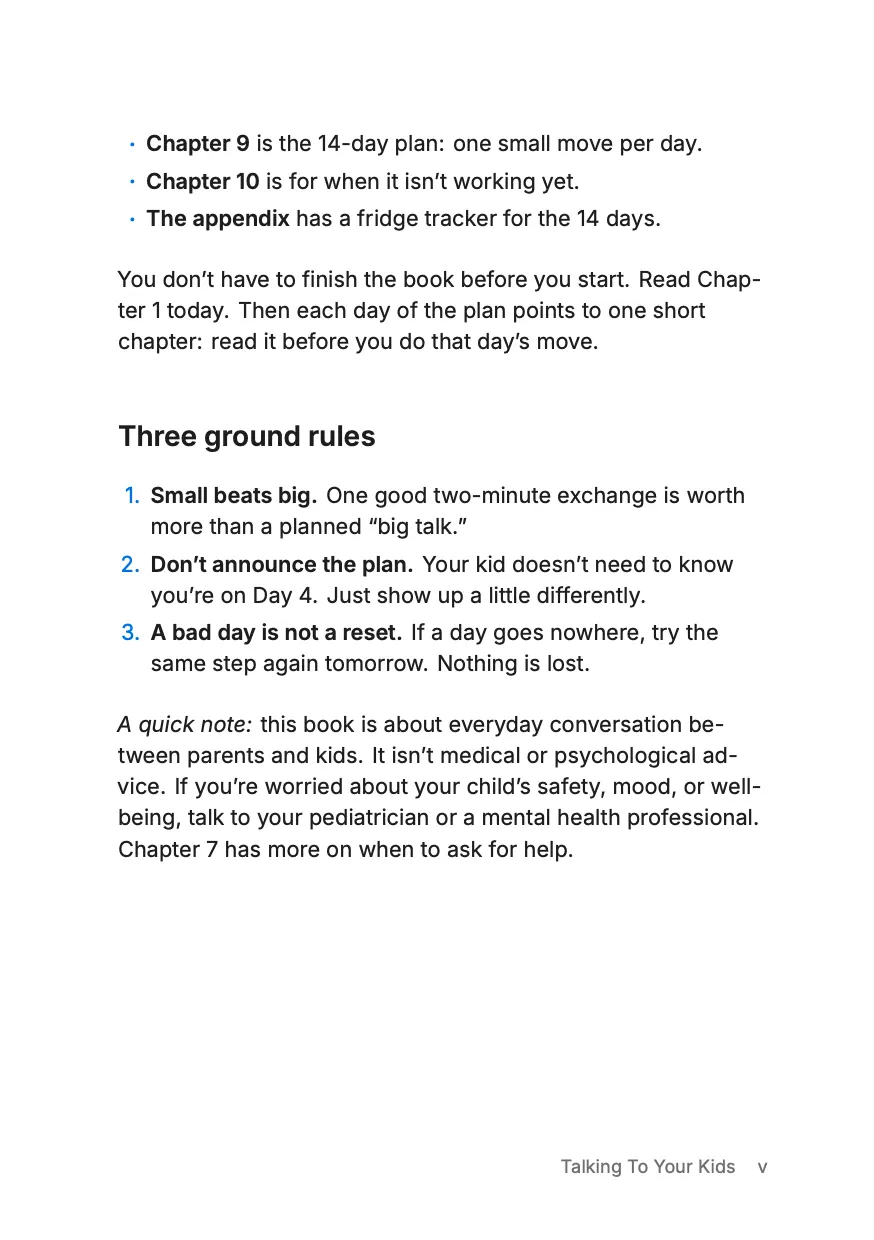
Who it's for, the promise, how the book works, and three ground rules.
Plan
One page. One line per day. Then you begin.
Chapter 1
What one-word answers usually mean, and what opening up can look like by day 14.
Chapter 2
Why "How was school?" shuts kids down, and what to ask instead.
Chapter 3
When kids tend to talk, and how to find your kid's two or three moments.
Chapter 4
The reactions that end a story, and how to leave the door open.
Chapter 5
Share your day in small, kid-sized stories so talk goes both ways.
Chapter 6
Let them be the expert on what they love. The day comes along with it.
Chapter 7
Stay calm, say thanks, and ask before you fix. Includes when to get more help.
Chapter 8
Tiny repeats, like high/low at dinner, kept light instead of mandatory.
Chapter 9
One action a day, the words to say, and what to watch for.
Chapter 10
Quiet kids, screens, siblings, a bad week. Adjust, and know when to ask for support.
Appendix
One printable page: the day, the move, a checkbox, and what they shared.

Author
Printable cards for the car, dinner, and bedtime.
Included
The best phrases from the book, plus a phone wallpaper.
Included
You get instant access to the PDF right after checkout.
On your phone, tablet, or computer.
No. It's a practical plan for everyday conversations, not medical or professional advice. The book also says when it's time to involve a professional or the school.
Before
You ask about the day and get "fine" or "nothing."
After
Your kid opens up about their day.
Follow the plan for 14 days and you'll start seeing the first signs of your kid opening up: a longer answer, a story you didn't ask for, a question about your day.